an independent documentary film company based in Los Angeles, California, exploring issues on culture, mental health and personal experience in Indonesia and around the world
NEWS
TRAILERS
If you would like to arrange a screening or have Director Robert Lemelson as a guest speaker, please email us at i nfo_elementalproductions.org
Afflictions: Culture & Mental Illness in Indonesia Series
40 Years of Silence: An Indonesian Tragedy
PRESS BOOK
BACK TO COVER
PRESS & REVIEWS
10 Questions for Robert Lemelson
Ajay Singh
February 5, 2009
In 1965-66, between 500,000 and 1 million Indonesians were slaughtered in one of the most barbaric state-sponsored humanitarian tragedies of the modern world. Long denied by the Indonesian government, the little-known massacre is mentioned in President Obamas bestselling book, The Audacity of Hope.
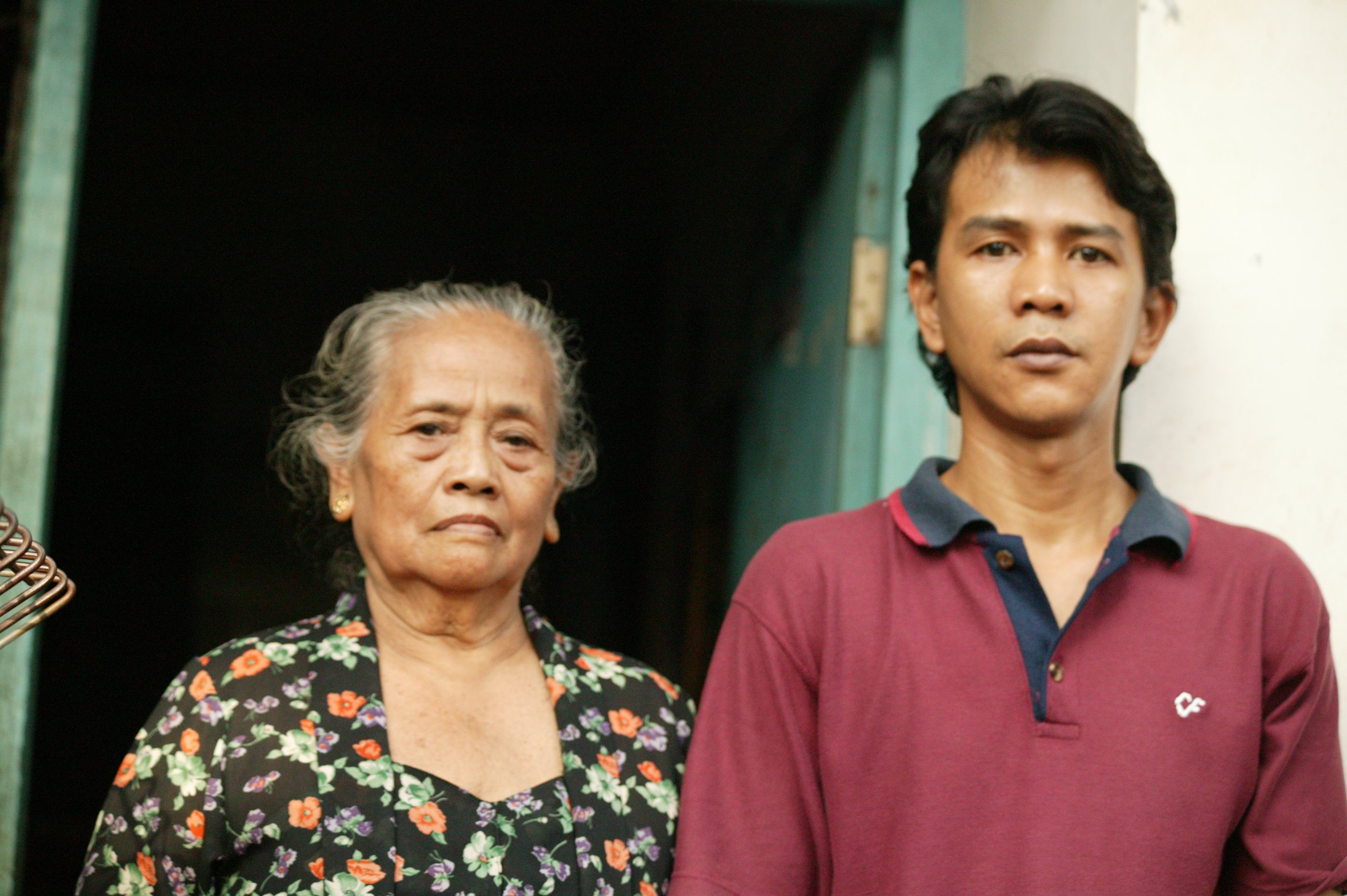
It is also the subject of a chilling documentary film produced and directed by Robert Lemelson, a research anthropologist at the Semel Institute for Neuroscience and Human Behavior. The film, 40 Years of Silence: An Indonesian Tragedy, follows the lives of four survivors and their families over a six-year period. Lemelson talks with Today Staff Writer Ajay Singh about the film and why the so-called 1965 event is still shrouded in silence.
What was the impetus for your film?
I was doing work in Indonesia with about 100 patients who had suffered a psychotic breakdown when I realized that the origins of some of their problems were in the events of 1965. I was in Indonesia in 1996-97 as a Fulbright scholar, a time when discussing, exploring, doing research on 65 was next to impossible. In fact, before [the late Indonesian President] Suharto fell from power in 1998, no one wanted to talk about 65. They were frightened and had good reasons to be. One of the survivors shown in my film, for example, had never mentioned to anybody that his father had been killed in front of him, that members of his family were taken away and that other members of his village had participated in the killings.
Do you find Indonesia appealing as an anthropologist?
Its one of the more culturally fascinating and diverse places in the world. My work is in cultural and trans-cultural psychiatry, and you need to pick a part of the world in which theres a large ethnographic corpus of the complicated relationships between culture and mental illness. My original project was looking at issues of outcome and recovery from severe mental illness, following the World Health Organizations studies that people in the developing world have better recovery outcomes: If you develop schizophrenia in Bali, India or Nigeria, youre more likely to return home and to work and have fewer hospitalizations.
Read more....
Breaking from the 'Silence'
By Anita B. Hofschneider
February 20, 2009
In a film both moving and disturbing, psychological anthropologist Lemelson explores the lives of four individuals and their families in Indonesia, and reveals their suffering through one of the largest unknown mass killings of the 20th century...
The films score, which was edited by Richard Henderson (Borat, The Life Aquatic), is entirely original and complements the intense testimonies of the participants. The use of archival footage and historical commentary is also effective, as is Lemelsons attention to character development. As one spectator commented, the film does not attempt to glamorize or create saints out of the victims. Rather, they are portrayed honestly as complicated people coming to terms with the trauma of their past. In fact, all of the survivors interviewed in the film are struggling with Post-Traumatic Stress Disorder and the social stigmatization that still haunts Communist-affiliated citizens in Indonesia.
Read more...
VOA Interview of Director Robert Lemelson on 40 Years of Silence
By Naratama
May 19, 2009
On May 19, director Robert Lemelson was interviewed by Naratama from Voice of America: Pop Notes, Indonesia, about 40 Years of Silence to be broadcast on TV in Indonesia. Video courtesy of VOA.
"Breaking the 40 Year Silence About the Anti-Communist Purge"
April 29, 2010
A feature-length documentary that was shown at the Boston International Film Festival over the weekend is an intergenerational depiction of the 1965-66 anti-Communist purge, in which an estimated 500,000 Indonesians were killed at the hands of the military.
40 Years of Silence: An Indonesia Tragedy was shot between 1997 and 2007 on the islands of Bali and Java. The film follows the stories of four people whose parents fell victim to the violence and torture of the military; some even witnessed the executions of their parents. After keeping their stories to themselves for 40 years, they reveal how they struggled to survive discrimination under Suhartos New Order regime and how those experiences still haunt them today...
"It was only after I knew them well that they agreed to speak about their experiences, Lemelson said. Some feared for their personal safety, but ultimately, they all felt that their stories should be told."
1965 Mass Killings Erased from History, Scholars Say
June 19, 2009
Singapore. Scholars attending a conference discussing the 1965 mass killings agreed on Friday that the Indonesian government had done very little to address the devastating historical event.
University of Sydneys Adrian Vickers said that Indonesians in general were still entrenched with the New Order frame of mind when it came to public discussion on the event, where the killings of the six generals by Indonesian Communist Party members is given more preeminence than the killings of the some 500,000 victims of alleged communist affiliation. He said that the government must change the national education curriculum to alter the prevailing mindset on the event.
Asvi Warman Adam, a senior researcher at the Indonesian Institute of Sciences, said that current official Indonesian history textbooks only mentioned the alleged 1965 communist coup, but not the mass killings that followed it.
"1965: Giving Voice to the Silenced Past"
By Armando Siahaan
June 1, 2009
The documentary includes black-and-white footage of the looting, arrests and violence that occurred at the time, which graphically illustrates the subjects stories and acts as an emotional time machine that allows the audience to experience the events as if watching in real time.
The documentary, enriched with colorful stories, leaves its audience with interwoven and conflicting feelings of sympathy, anger, relief and a certain degree of shame for being unaware of such a horrific yet veiled past.
"40 Years of Silence" is not only a documentation that unravels one of the darkest chapters in Indonesian history, it is a medium of liberation that clearly gives voice to victims of an until-now silenced past.
"Robert Lemelson: Indonesia, a paradise for work and study"
By Sri Wahyuni
August 2, 2009
The first time he arrived in Bali as a tourist in 1993, American researcher, philanthropist and documentary filmmaker Robert Lemelson from the University of California, Los Angeles, (UCLA) promptly felt a great affection and affinity for the country and its people.
"I liked the warmth, kindness and hospitality of the people I met," Lemelson told The Jakarta Post during a recent visit to Yogyakarta for a project with Gadjah Mada University's (UGM) School of Psychology. And then when he returned to live there for two years as a Fulbright scholar conducting a research dissertation on mental illness, Lemelson developed an even stronger bond.
"I felt that Indonesia's rich and diverse cultural tradition made it an ideal place to work and study for an anthropologist," said the research anthropologist at UCLA's Semel Institute for Neuroscience.
"DIgging into Indonesia's 'black hole of silence'"
By Isabel Esterman
August 1, 2009
Beginning in October 1965, hundreds of thousands of Indonesians were killed in a state-sanctioned mass murder of accused communists... It was one of the bloodiest episodes in one of the bloodiest centuries of human history. Even in Indonesia, though, it's a story that remains largely untold...
Although Lemelson stresses that "we didn't come to ostensibly make a political film", he is not entirely without political intentions. He hopes bringing these personal stories of trauma and healing to the public can help reignite a broader discussion in Indonesian society. After decades of silence, having history reworked, rewritten and contested is a healthy process for society, he says.
"You see the positive effects of opening up a dialogue on difficult national issues," he told the audience at the Goethe screening, giving the example of Barack Obama's election as US president after the struggles of the American civil rights movement. "I hope this film can be a small drop in the process of democratization."
"Film Screening and Discussion of '40 Years of Silence: An Indonesian Tragedy' Examines Effects of Hidden Genocide
Ethel Le Frak Holocause Education Conference At Seton Hill University
One of the key points that emerged from the film and panel discussion focused on the possibility of reconciliation. Lemelson asserted that reconciliation, if it comes at all, will come through truth, by breaking through the lies of the propaganda so everyone can agree upon a common narrative of the events. As the name of the film implies, many people in Indonesia and around the world are still unaware about what actually took place in the mid-1960s...
When asked by an audience member what should be done about genocides and mass killing going unrecognized today, Lemelson asserted that the perpetrators need to know that they can be brought to justice through the international community.
40YearsOfSilenceEPKwithArticles.pdf
© 2007-2010 Elemental Productions. All Rights Reserved. Call: 310 454 5902 Fax: 310 454 1417 Email: info_elementalproductions.org
40 Years Study Guide - College-small.pdf
SI-STUDY GUIDE.pdf
BD-STUDY GUIDE.pdf
FV-STUDY GUIDE.pdf
MF-STUDY GUIDE.pdf
40 YEARS OF SILENCE:
AN INDONESIAN TRAGEDY
AFFLICTIONS: CULTURE
& MENTAL ILLNESS IN
INDONESIA SERIES
SHADOWS &
ILLUMINATIONS
THE BIRD DANCER
FAMILY VICTIM
RITUAL BURDENS
MEMORY OF MY FACE
KITES & MONSTERS
JATHILAN
SHADOWS & ILLUMINATIONS